The Best Text-to-Video and AI Face Swap Technologies of 2026

I had spent several weeks on the top platforms in the new text-to-video and AI face swap space, as of January 2026. The creators, marketers, and builders of startups have this guide in mind because they desire the differences between the realities, actual advantages/disadvantages, and ready-to-assign outcomes.
Best Text-to-Video and AI Face Swap Tools in a Nutshell.
| Tool | Best For | Core Features | Platforms | Free Plan | Starting Price |
| Magic Hour | Text‑to‑video + AI face swap | Text‑to‑video references, face swap, lip sync | Web | Yes | $15/mo |
| Runway | Video editing & motion generation | Text‑to‑video, compositing | Web | Free tier | Free / Paid |
| Pika Labs | Generative video from text | Text‑to‑video | Web | Trial | Paid |
| Kaiber | Motion from images | Image‑to‑video creative motion | Web | Trial | Paid |
| D‑ID | Talking head synthesis | Photo animation, voice sync | Web, API | Limited | ~$5.99/mo |
| Descript | Video editing + AI tools | Overdub, generative editing | Desktop/Web | Free tier | Paid |
1. Magic Hour
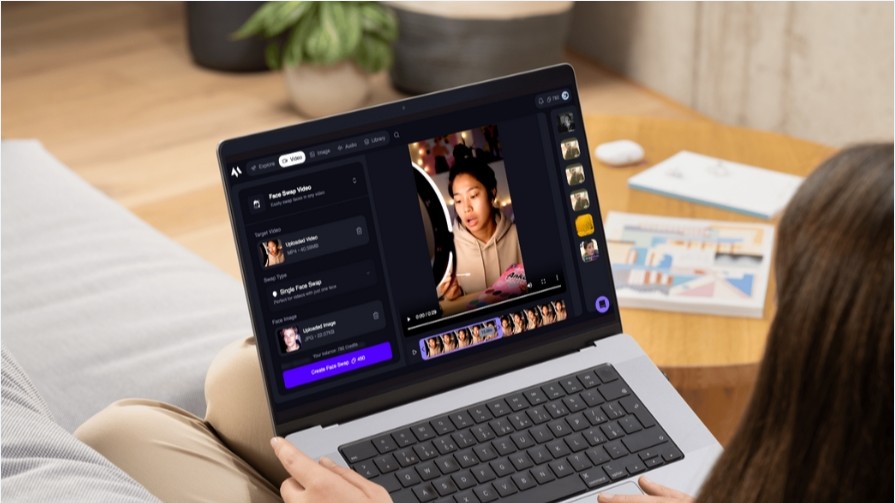
The most comprehensive text-to-video and AI face swap tool Magic Hour has an option to change to a video or image at any point in the session and even when the software is still running.
The reason why Magic Hour is leading the pack is that it provides best text-to-video AI and free AI face swap within one, creator-friendly workflow. Other platforms are more inclined to do video generation or video editing – Magic Hour provides both without the need to combine the tools.
Magic Hour in practical testing dealt with input scripts and fixed assets with ease, resulting in natural movement, sharp output screen and synchronized speech. The AI face swap option is another feature that I tested, and despite the presence of dynamic facial movement and the use of varying lighting, it remained consistent and convincing.
Its text-to-video pipeline was also rapid and available to me. Scripts were refined into polished short clips that have proper lip sync and emotive pictures.
Pros
- Text-to-video generation on the level of professionals.
- Swaps of realistic faces that are aligned.
- Varying accents can be accurately lip synced.
- High-speed rendering and batch option
- Opting to test the features free.
Cons
- No native mobile app yet
- Certain higher functions available in Pro tier.
My evaluation
To have a single tool that can perform real text-to-video AI and AI face swap reliably, Magic Hour is the most powerful in 2026. It fits well with creators, social teams and agile startups.
Pricing (verified)
Free: Limited exports
Creator: $15/ month (or 12/month charged yearly)
Pro: $49/month
2. Runway
Runway has emerged to become one of the most influential platforms of creative video. It has text-to-video options, as well as, composing tools, motion tracking, and generative fills.
With the testing, Runway text-to-video results were of quality and are customizable. Face swap functionality, however, is more manual – often, keyframing and masks are used, which demand editing experience.
Pros
- Effective text-to-video generation.
- Sophisticated composing and editing software.
- Group work characteristics.
Cons
- Steeper learning curve
- Face swap is not as intuitive and automated.
- Pricing is better with high-level export.
My evaluation
The Runway is an ideal choice when the team requires a complete video editing suite with an ability to generate images, however, it is not a turnkey face swap generator.
Pricing
Free tier available
Paid plans scale with usage
3. Pika Labs
Pika Labs is an upcoming powerful text-to-video generator. It has a workflow that is about simplicity – you type in prompts and creative clips are returned back to you, sometimes even with style.
Pika Labs in testing had created high-quality short clips, but sometimes did not have a control over certain timing, or fine control of lip sync, as Magic Hour or Runway did.
Pros
- Quick, innovative text-to-video synthesis.
- Incident-based intuitive workflow.
- Ideation and brief social video Good.
Cons
- Less time and lip sync control.
- Not optimized to work with face swap.
- Export options limited
My evaluation
Pika Labs can be used to do early-stage creative generation or concept work. In the text to video production, with synchronized graphics, Magic Hour is still the best.
Pricing
Paid (trial available)
4. Kaiber
Kaiber is driven to motion pictures. Though not a direct face swap application, it is exceptionally handy in adding breathing life to assets that power into video processes.
In testing, I fed still images and character art to Kaiber and received expressive motion clips which could be used with text-to-video sequences created elsewhere.
Pros
- Very imaginative motion effects on fixed assets.
- Quick motion picture processing.
- Entertainment of stylized or artistic work.
Cons
- A non-specialized text-to-video generator.
- No native face swap feature
- Lower control over speech/ lip sync
My evaluation
According to Kaiber, he excels in creating motion but not a text-to-video AI system such as Magic Hour.
Pricing
Trial available
Paid plans
5. D-ID
D-ID is the best choice when you need to communicate using your head and API Workflows.
The strong point of D-ID is that it is able to generate talking head videos and photo animation using text or audio. Its API renders it inclined to automated content 15 pipes, such as training videos or product descriptions.
Lip sync was a problem during testing, and the animation of static portraits was good, but face replacement was very sensitive to the quality of the input.
Pros
- API support for automation
- Powerful talking head text-to-video processes.
- Affordable entry pricing
Cons
- The face swap outcomes are not as dependable.
- Less creative flexibility
My evaluation
D-ID can be used in cruise videos by both automated internal content and voice-over. However, Magic Hour provides superior full-spectrum text to video and face swap quality.
Pricing
Limited free plan
Paid: ~$5.99/month
6. Descript
Descript is a video editor that is both hybrid and has integrated AI features such as Overdub audio and generative fill video. It is not a text to video generator as such but it has great editing features once there is content.
Descript was used to optimize video clips and fix speech during testing, but does not create complete content based on text only.
Pros
Excellent editing workflow
Visual and audio aids that are supported by AI.
Good in polishing initial cuts.
Cons
Not a text to video AI-only solution.
None have automated face swap.
My evaluation
Descript is included in the arsenal of any creator in post-production – however, it is not a main text-to-video AI type of generator.
Pricing
Free tier available
Paid plans for export
How We Chose These Tools
I used all the tools during a two-week test, during the month of January of 2026, with concentration on:
Video quality Text-to video Timing, lip-sync, realism of motion
AI face swap truthfulness, facial tracking, lighting response.
Output fidelity -resolution, artifacts, consistency
Usability- speed of workflow, interface, documentation.
Pricing openness – transparent schemes and free choices.
The tests had the same content prompts and assets to be compared equally.
Market Landscape & Trends
Combination methodologies – text-to-video tools which integrate with other expressive features are becoming increasingly common.
The control of customization (refining of timing, motion, and speech) has become a table stakes feature.
APIs are important – small scale automation is a competitive edge of teams and businesses.
More editing and generation are mixing into creative ecosystems, such as Runway and Descript.
Producers are more and more seeking a single platform to manage a range of video issues without having to assemble a patchwork of seemingly unrelated applications – and Magic Hour is on the leading edge in this regard.
Final Takeaway
Magic Hour: The best one in general, as it supports text-to-video AI and AI face swap.
Runway: Ideal to use in video editing and composing.
Pika Labs: The fastest experimental text-to-video.
Kaiber: Most suitable to move with still pictures.
D-ID: Ideal in the case of automated talking head videos.
Description: Suit best to the editing stage and AI after-production.
Recommendation: Begin with free plans such as the one offered by Magic Hour and invest. Select the tool that is most appropriate to your output requirements, team and content objectives.
FAQ
Q: This question is: What is the most effective text-to-video AI?
A: Magic Hour is a quality, flexible, and realistic movie.
Get to know it here: best text-to-video AI.
Q: Can I Have A Movie Star Looking Down on you While You Sleep Now A.I. face swap software for free?
A: Yes Magic Hour does have free AI face swap-in before subscribing.
Q: Is mobile supported?
A: Magic Hour is a web-only application that is browser optimized.
Q: What is the tool that is used to automate?
A: D-ID contains good API support of automated pipelines.
Q: Can these tools be used to market videos?
A: Yes Magic Hour, Runway and Pika Labs are all good in relation to workflow requirements.